Blog
Check your car battery’s health
After a long, hot summer, your car battery may have taken more damage than you realise. High temperatures speed up internal wear, meaning even a healthy-looking battery could be weaker than it seems. Now, as we reach the end of summer and colder weather approaches, it’s the perfect time to give your battery some attention. Cold temperatures put extra strain on car batteries, and the last thing any driver wants is to be left stranded on a frosty morning with a vehicle that won’t start.
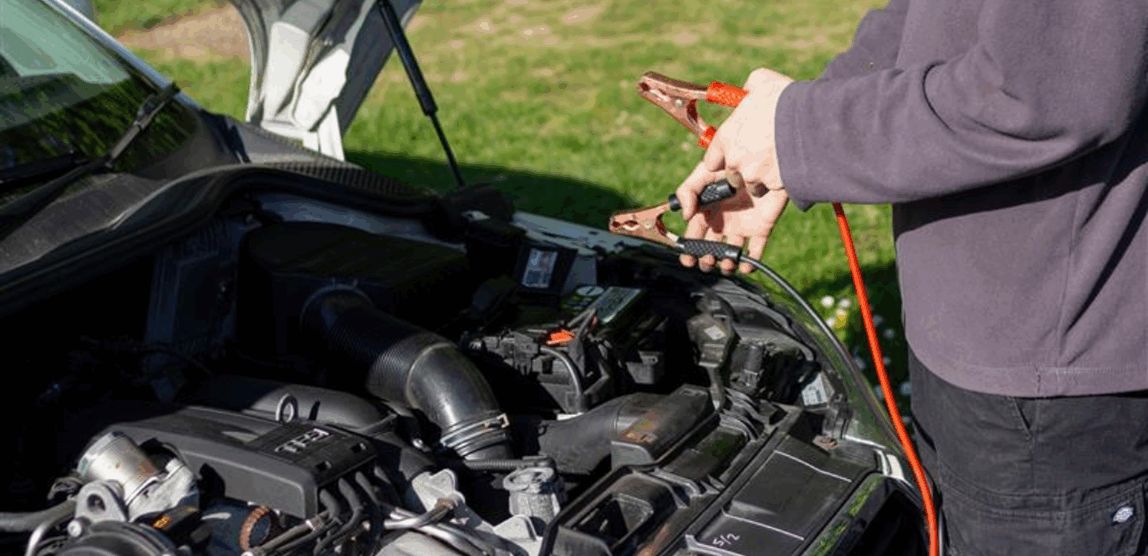
A quick fix includes charging your battery, jump start it or in the worst-case scenario, getting it replaced! But by following our blog below you can prepare for the worst before it happens!
Common reasons for a damaged car battery.
Firstly, it’s good to know that a flat battery is the most common breakdown in vehicles. This is because so many components of your car impact your battery. However, many of these things are avoidable.
Car batteries naturally lose charge – The longer you leave your car without driving it, the more likely that your car battery is going to be flat. Over time a battery will slowly drain power and if it drains too much, it won’t have the charge to start.
Leaving electrics on –Components like headlights and internal cabin lights when not in the car will drain your battery. Additionally,if sitting in your car idle with the engine off, items like phone chargers, sat navs, and dash cams will draw power directly from the battery. Doing this for long periods of time will drain the charge.
Short Journeys – If you only drive short journeys, the battery cannot retrieve a full charge, reducing its ability to hold a charge and shortening its lifespan over time.
How does weather affect your car battery?
Hidden weakness –A battery can seem fine in the summer, but the heat damage means it may fail late, normally when the cold weather arrives.
Weather has a huge impact on car battery health — both summer heat and winter cold affect it in different ways:
That’s why autumn is the perfect time to get your battery checked — before the cold weather exposes any hidden problems.
How to check your battery health at home.
Checking the voltage with a voltmeter – Before starting, switch off the ignition and make sure that all car accessories that could drain the battery, including the air conditioning, headlights and car radio are turned off.Carefullyremove the covers on the battery terminals and connect the positive end side of the voltmeter to the positive (red) terminal first. Then connect the negative side to the voltmeter to the negative (black) terminal.
Now, check your reading. A healthy battery should read between 12.4V and 12.7V. A reading of just under — like 12.3V — can indicate your battery is only 75% charged.
Try the headlight test – While the headlight test isn’t the most accuratetest, it can sometimes be a good indicator that something is wrong before you even look at the battery. Just turn your headlights on and check to see whether they look darker than they should be. If that is the case, your battery may be low.
Additionally you can put your foot on the accelerator lightly; if your headlights get brighter, it might mean that there is a fault with the alternator, which is unable to supply enough current to the battery. Headlights should stay at the same level when revving the car.
Battery health indicator – Many modern cars come withbatteries that have an in-built battery health indicator. These indicators will have some kind of arrow that turns either red or green depending on the state of the battery. Red indicates low voltage and green indicates good condition.
Physical check – You can often spot the warning signs of a failing battery with a quick visual check.
While it’s still in the engine bay, shine a torch over the battery and look for corrosion around the terminals. A strong sulphur smell, bubbling, or dried liquid are all red flags — if you notice any of these, it’s time to replace your battery.
For a closer look, you can safely remove the battery (negative/black terminal first, positive/red terminal last). Once out, check the casing carefully. Bulges suggest overcharging, and any cracks or leaks mean the battery needs replacing straight away.
Don’t risk being caught out with a flat battery — if you spot any of these signs, visit your nearest Autoparts store branch for a replacement or shop here.
How to keep your battery from dying:
Fortunately, there are plenty of simple steps you can take to keep your car battery in top condition and avoid being caught out with a flat.
Keep your battery terminals clean – Dirt and corrosion can interrupt the flow of power. Use a brush and a baking soda solution to clean them, or shop
online or ask in store for cleaning products that make the job easier.
Know your battery’s age – Most last 5–7 years. After that, replacement is often the most reliable option, especially before the cold weather sets in.
If your battery is getting older or you’ve noticed signs of weakness, don’t wait until it fails. Browse our full range of replacement car batteries online or visit your nearest Autoparts branch for expert advice.
Disclaimer: all images and content are owned and copyright by their respective owners and website (www.arnoldclarkautoparts.com) and “https://carchips.net//blog” is for news, information, product news and reviews.