Blog
A crash course on wheel alignment
Your wheels go through a lot to get you where you need to go. Intense weather and rough roads can worsen the quality of your tires and the positioning of your wheels. To keep your car at its best, add regular wheel alignments to your maintenance routine.
Let’s go over what exactly wheel alignment is, some signs you may need one, and where to get this service done.
What is wheel alignment?
Despite the name, wheel alignment focuses on your car’s suspension, which can become worn or stretched out with regular use. By adjusting a vehicle’s suspension to change the angles of the wheels, you change how the tires contact the road, improving your driving experience and prolonging the life of your tires.
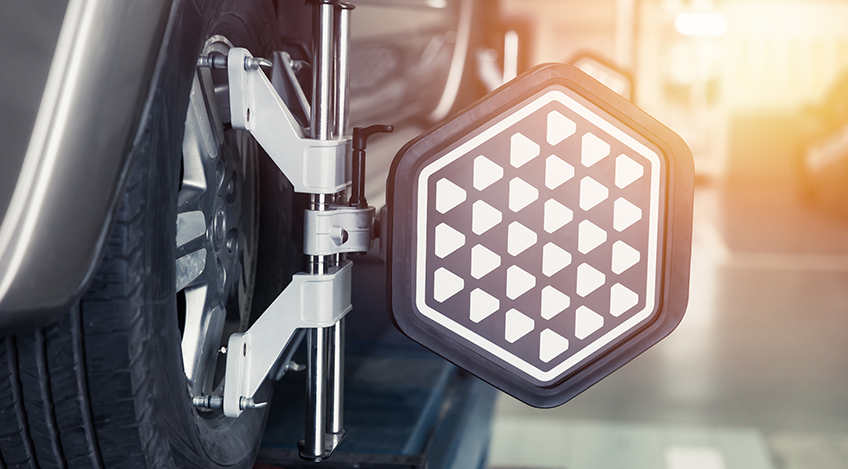
When you take your car in for a wheel alignment, an alignment machine is used to assess the angle of each wheel. A mechanic will then take those measurements and adjust the camber, caster, and toe of each wheel as needed.
Proper alignment will help your tires last longer, improve gas mileage, and provide a smoother ride.
Causes and symptoms of misaligned wheels
Certain driving conditions and habits can take a toll on your tires. Intense winter weather, for example, can shift tires out of place if the roads aren’t clear. Tire blowouts, zooming over speed bumps, or sudden impacts, such as hitting curbs or potholes, can also cause misalignment.
If your wheels go out of alignment, your vehicle may exhibit these symptoms:
- Steering wheel making noise or vibrating
- Squealing tires
- Rough/bumpy ride
- Off-centre steering wheel
- Vehicle drifting to one side
- Uneven tire wear
If you’re concerned your wheels have shifted, have a certified mechanic look at your vehicle—it’s always better to be safe than sorry.
How often do you need an alignment
Aside from noticing any of the above symptoms, there are other occasions when getting your wheels aligned is recommended:
- After installing new suspension and/or steering parts
- After changing your tires
After adding a body modification
Even if none of those symptoms or events apply to you, this doesn’t mean you should avoid aligning your wheels. Like tire rotations, wheel alignments follow a schedule that you need to keep up with.
If you frequently drive on rough roads, check your wheel alignment at least once a year. For more relaxed conditions, an alignment every two or three years is usually sufficient. Your owner’s manual will provide more guidance on how often to get your wheels aligned.
Wheel alignments are sometimes confused with tire balancing, but they’re not the same. Check out this article to learn the difference.
Where to get an alignment done
Like most car maintenance tasks, you can get your wheels aligned at your local garage. Prices can vary, so check ahead of time to compare rates. A rough price range is between $90 to $200, depending on your vehicle type and whether you need two or four wheels aligned.
If you’re an experienced DIYer, you could align your wheels yourself. However, for all-wheel-drive vehicles, all four wheels need to be aligned simultaneously and should therefore be taken to a garage.
You can get your wheels aligned at any NAPA AUTOPRO service centre.
DIY alignment
If your vehicle uses front-wheel drive, you may be able to align it yourself. Only attempt a DIY wheel alignment if you have a lot of experience working on your car. Otherwise, trust a professional mechanic with this task.
Do your wheel alignment outside so the tailpipe exhaust blows away from you. Follow these steps carefully:
- Turn off the electrical system but keep the engine on so the steering wheel can move.
- Use a jack and jack stands to raise the front wheels. Check out this guide to find the right jack for your vehicle.
- Look where one wheel is pointing from the front of the car. If it points inward toward the centre, the outer tire rod needs to be tightened. If the wheel points outward, the tire rod needs to be loosened.
- Loosen the nuts connecting the outer and inner tire rods. Tighten or loosen the outer rod according to step 3.
- Set your steering wheel straight and confirm the tire is now facing forward/straight. Repeat this process with the other tire.
- Take your car for a test drive to ensure the wheels are properly aligned. It’s always wise to have a professional check your work.
If you have any questions about wheel alignment or finding the right tools for your next DIY job, visit a NAPA Auto Parts store to speak with an expert.
Disclaimer: all images and content are owned and copyright by their respective owners and website (blog.napacanada.com) and “https://carchips.net//blog” is for news, information, product news and reviews.